In the ever-evolving cybersecurity landscape, threat hunting tools emerge as indispensable weapons in the battle against malicious actors. These specialized tools empower security teams to proactively detect, investigate, and neutralize threats, safeguarding systems and data from potential breaches.
From intrusion detection systems to endpoint monitoring solutions, the arsenal of threat hunting tools is vast and diverse. In this comprehensive guide, we delve into the world of threat hunting tools, exploring their capabilities, benefits, and integration with security infrastructure.
We’ll also uncover emerging trends and provide real-world examples of their effectiveness in combating cyber threats.
Overview of Threat Hunting Tools
Threat hunting tools are specialized software applications designed to assist security analysts in proactively identifying and investigating potential threats within a network or system.
These tools offer several benefits, including:
- Increased visibility:Threat hunting tools provide a comprehensive view of network activity, allowing analysts to identify anomalies and potential threats that may be missed by traditional security measures.
- Improved detection capabilities:These tools use advanced analytics and machine learning algorithms to detect suspicious behavior and identify potential threats that may evade traditional signature-based detection methods.
- Accelerated investigation:Threat hunting tools automate many of the tasks involved in threat investigation, such as log analysis, event correlation, and threat intelligence lookup, enabling analysts to respond to incidents more quickly and effectively.
Popular Threat Hunting Tools
Several popular threat hunting tools are available, including:
- Splunk:A comprehensive security information and event management (SIEM) platform that offers threat hunting capabilities through its built-in analytics and machine learning engine.
- Elasticsearch:An open-source search and analytics engine that can be used for threat hunting by indexing and analyzing large volumes of security data.
- Zeek (formerly Bro):A network traffic analysis tool that provides deep visibility into network activity and can be used for threat hunting by identifying suspicious patterns and anomalies.
- ThreatQ:A cloud-based threat intelligence platform that provides threat hunting capabilities through its integration with various security data sources and its machine learning-powered threat detection engine.
Types of Threat Hunting Tools
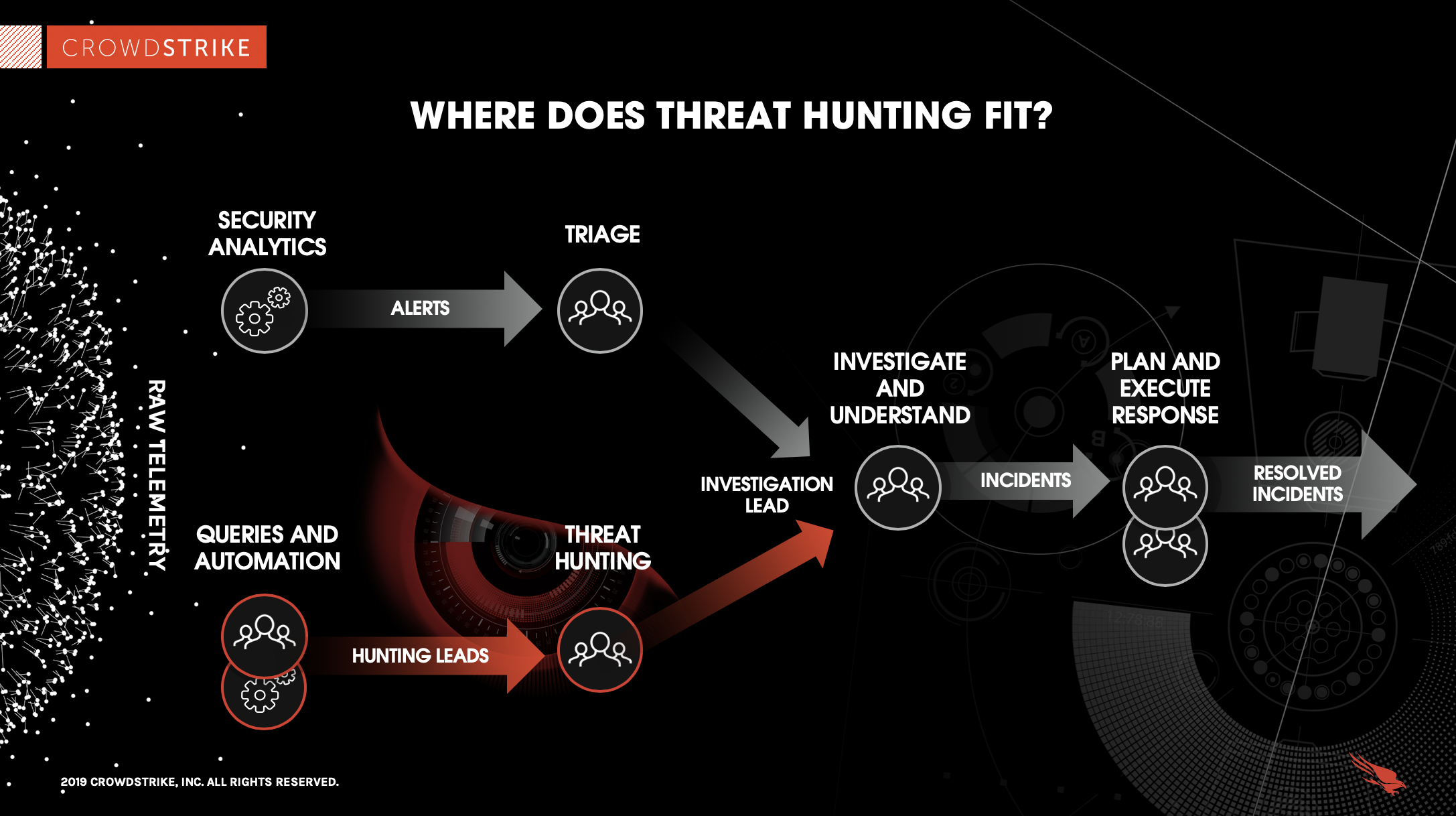
Threat hunting tools can be categorized based on their capabilities, offering various features and functionalities to support threat hunting efforts. Let’s explore the different types of tools and their specific roles:
Network Traffic Analysis Tools
- Analyze network traffic to identify suspicious patterns and anomalies.
- Monitor network activity for unusual connections, data transfers, or communication patterns.
- Examples: Wireshark, Zeek (formerly Bro), Suricata
Endpoint Detection and Response (EDR) Tools
- Monitor endpoints (e.g., laptops, desktops, servers) for malicious activities and threats.
- Detect suspicious behavior, such as unauthorized file access, process execution, or network connections.
- Examples: CrowdStrike Falcon, SentinelOne, Carbon Black
Security Information and Event Management (SIEM) Tools
- Collect and analyze security logs and events from various sources across the network.
- Correlate and prioritize alerts to identify potential threats and security incidents.
- Examples: Splunk, Elastic Stack (ELK), QRadar
User and Entity Behavior Analytics (UEBA) Tools
- Analyze user and entity behavior to detect anomalies and identify potential threats.
- Monitor user activity, such as login patterns, file access, and network connections, to identify deviations from normal behavior.
- Examples: Exabeam, Splunk UBA, RSA NetWitness
Threat Intelligence Platforms
- Provide access to curated threat intelligence feeds and data from external sources.
- Enrich threat hunting efforts with information on known threats, vulnerabilities, and threat actors.
- Examples: ThreatConnect, VirusTotal, Mandiant Threat Intelligence
Key Features of Threat Hunting Tools
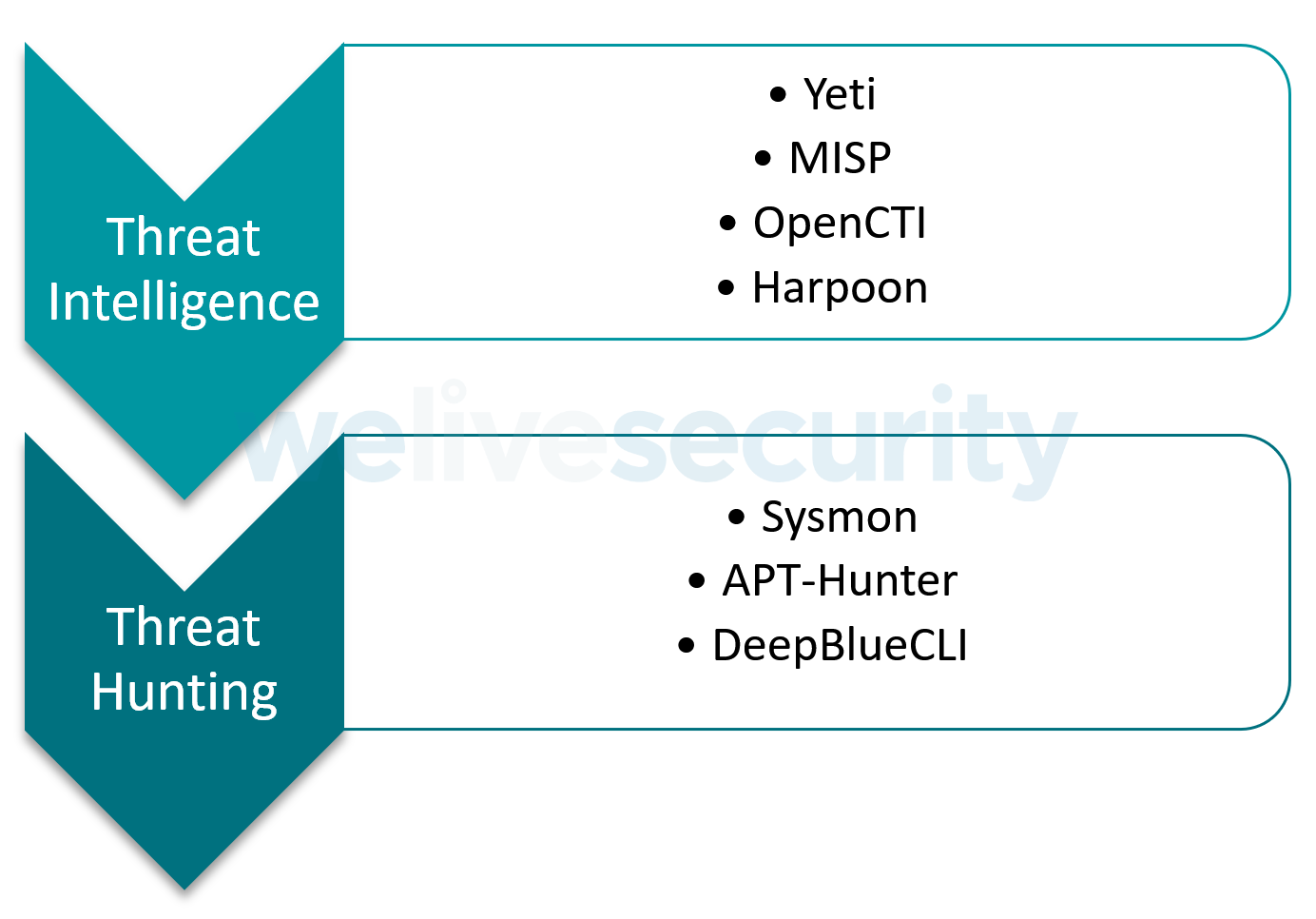
Effective threat hunting tools should possess a combination of features to empower analysts in identifying and mitigating potential threats. These features include data aggregation, advanced analytics, threat intelligence integration, and visualization capabilities.
When conducting threat hunting, it’s crucial to understand the network you’re protecting. Network mapping tools can help visualize and analyze your network infrastructure, providing insights into potential vulnerabilities and attack paths. By integrating network mapping into your threat hunting toolkit, you gain a comprehensive understanding of your network, enabling you to detect and respond to threats more effectively.
Data Aggregation
Threat hunting tools must have the ability to collect and aggregate data from various sources, such as network traffic, endpoints, and security logs. This comprehensive data collection enables analysts to have a holistic view of the network and identify potential threats that might otherwise go unnoticed.
Advanced Analytics
Advanced analytics capabilities are crucial for threat hunting tools to perform in-depth analysis of the collected data. These tools should be equipped with machine learning algorithms, statistical analysis techniques, and pattern recognition methods to detect anomalies and identify suspicious activities that could indicate a potential threat.
Threat Intelligence Integration
Integrating threat intelligence feeds into threat hunting tools provides analysts with access to the latest information on known threats and vulnerabilities. This integration enables tools to correlate internal data with external threat intelligence, enhancing the accuracy and efficiency of threat detection.
Threat hunting tools are essential for identifying and mitigating potential threats to your organization. They provide you with the visibility and insight you need to understand your network and detect suspicious activity. One tool that can be particularly useful for threat hunting is a space request tool.
This tool can help you identify and request additional space in your network, which can be critical for ensuring that you have the resources you need to effectively detect and respond to threats.
Visualization Capabilities
Visualization capabilities are essential for threat hunting tools to present complex data in a user-friendly and easily interpretable format. Dashboards, graphs, and other visualization tools allow analysts to quickly identify trends, patterns, and outliers that could indicate potential threats.
Integration with Security Infrastructure: Threat Hunting Tools

Threat hunting tools are most effective when they are integrated with other security systems within an organization’s security infrastructure. This integration allows for the sharing of threat intelligence, the automation of threat hunting processes, and the orchestration of responses to detected threats.
Integrating threat hunting tools with other security systems can be a challenge, however. The different systems may use different data formats, have different security requirements, and be managed by different teams. It is important to carefully plan and implement integrations to ensure that they are successful.
Challenges of Integration
- Different data formats: Threat hunting tools and other security systems may use different data formats, which can make it difficult to share threat intelligence. For example, a threat hunting tool may use a JSON format to store threat data, while a SIEM may use a syslog format.
- Different security requirements: Threat hunting tools and other security systems may have different security requirements, which can make it difficult to integrate them securely. For example, a threat hunting tool may require access to sensitive data, while a SIEM may have strict access controls.
- Different management teams: Threat hunting tools and other security systems may be managed by different teams, which can make it difficult to coordinate integration efforts. For example, a threat hunting team may be responsible for managing the threat hunting tool, while a security operations team may be responsible for managing the SIEM.
Best Practices for Integration, Threat hunting tools
- Use a common data format: To facilitate the sharing of threat intelligence, it is important to use a common data format. This can be a standard format, such as JSON or XML, or a custom format that is agreed upon by all of the systems that will be integrated.
- Implement strong security controls: To ensure that integrations are secure, it is important to implement strong security controls. This includes using encryption to protect data in transit, authenticating and authorizing users, and logging all activity.
- Coordinate integration efforts: To ensure that integrations are successful, it is important to coordinate integration efforts between the different teams involved. This includes planning the integration, testing the integration, and monitoring the integration after it has been deployed.
Examples of Successful Integrations
- Threat hunting tool integrated with a SIEM: A threat hunting tool can be integrated with a SIEM to share threat intelligence and automate threat hunting processes. For example, the threat hunting tool can send alerts to the SIEM when it detects a potential threat.
The SIEM can then investigate the alert and take appropriate action, such as blocking the threat or quarantining the affected system.
- Threat hunting tool integrated with a SOAR platform: A threat hunting tool can be integrated with a SOAR platform to orchestrate responses to detected threats. For example, the threat hunting tool can trigger a SOAR playbook when it detects a potential threat.
The SOAR playbook can then automate the response to the threat, such as isolating the affected system or launching an investigation.
Use Cases for Threat Hunting Tools
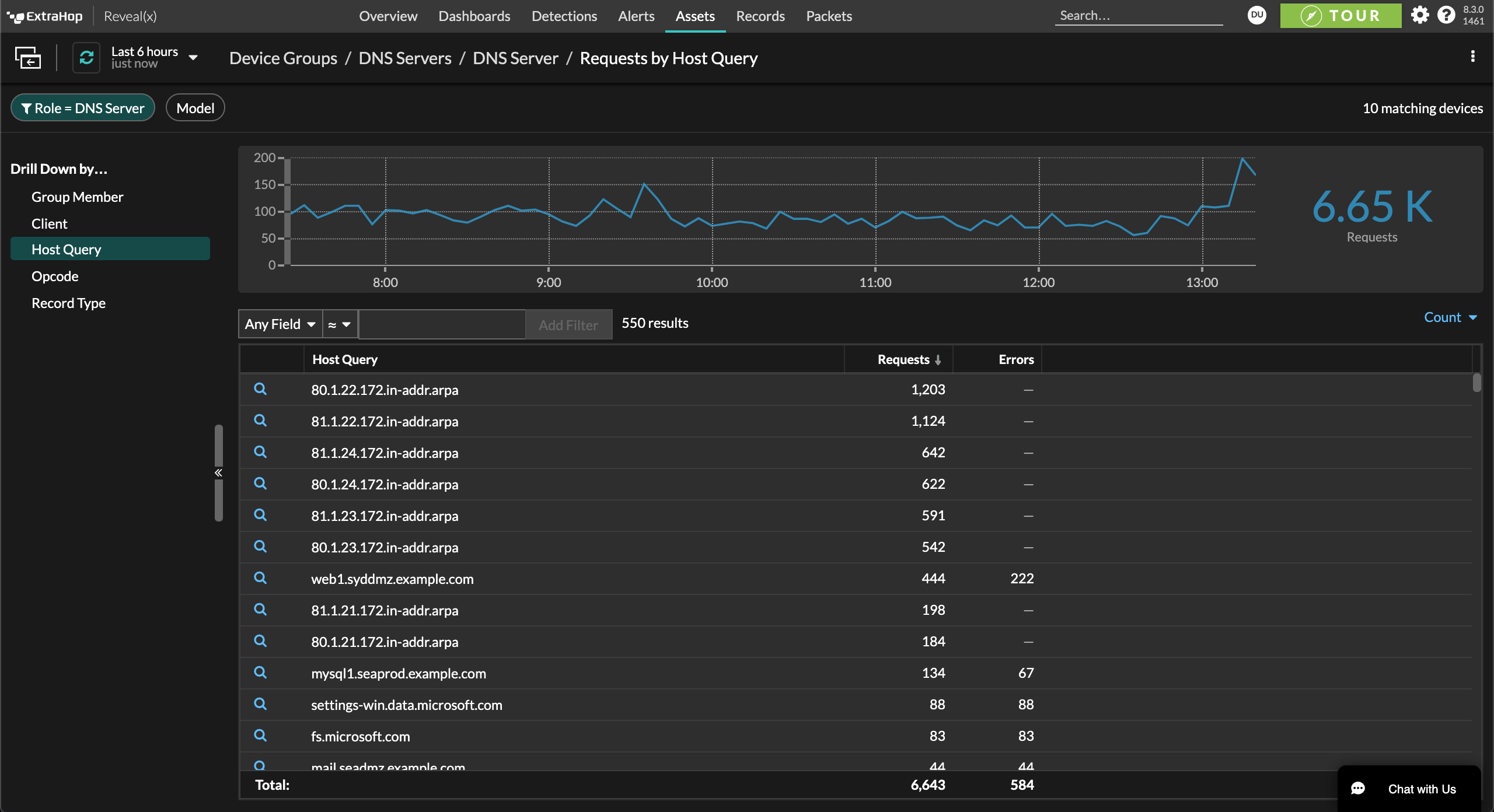
Threat hunting tools are designed to help organizations proactively identify and respond to threats that may have bypassed traditional security defenses. They offer a range of capabilities that can be applied to various use cases, providing organizations with the ability to enhance their security posture and reduce the risk of successful cyberattacks.
Common use cases for threat hunting tools include:
- Advanced Threat Detection:Identifying and investigating sophisticated threats that may have evaded signature-based detection systems.
- Insider Threat Detection:Monitoring user activity and identifying suspicious behaviors that may indicate malicious intent or data exfiltration.
- Targeted Attack Detection:Detecting and responding to targeted attacks that are specifically designed to bypass traditional security controls.
- Incident Response:Triaging and investigating security incidents to determine the scope and impact of the attack, and identifying the root cause.
- Proactive Threat Hunting:Regularly searching for indicators of compromise (IOCs) and other suspicious activity to identify potential threats before they can cause damage.
Real-World Examples
Numerous organizations have successfully deployed threat hunting tools to improve their security posture and respond to threats effectively. Here are a few examples:
- Financial Services Company:Used threat hunting tools to identify and disrupt a targeted attack that was attempting to steal sensitive customer data.
- Healthcare Organization:Deployed threat hunting tools to detect and respond to an insider threat that was exfiltrating patient data.
- Government Agency:Implemented threat hunting tools to proactively identify and investigate advanced persistent threats (APTs) targeting their network.
Emerging Trends in Threat Hunting Tools
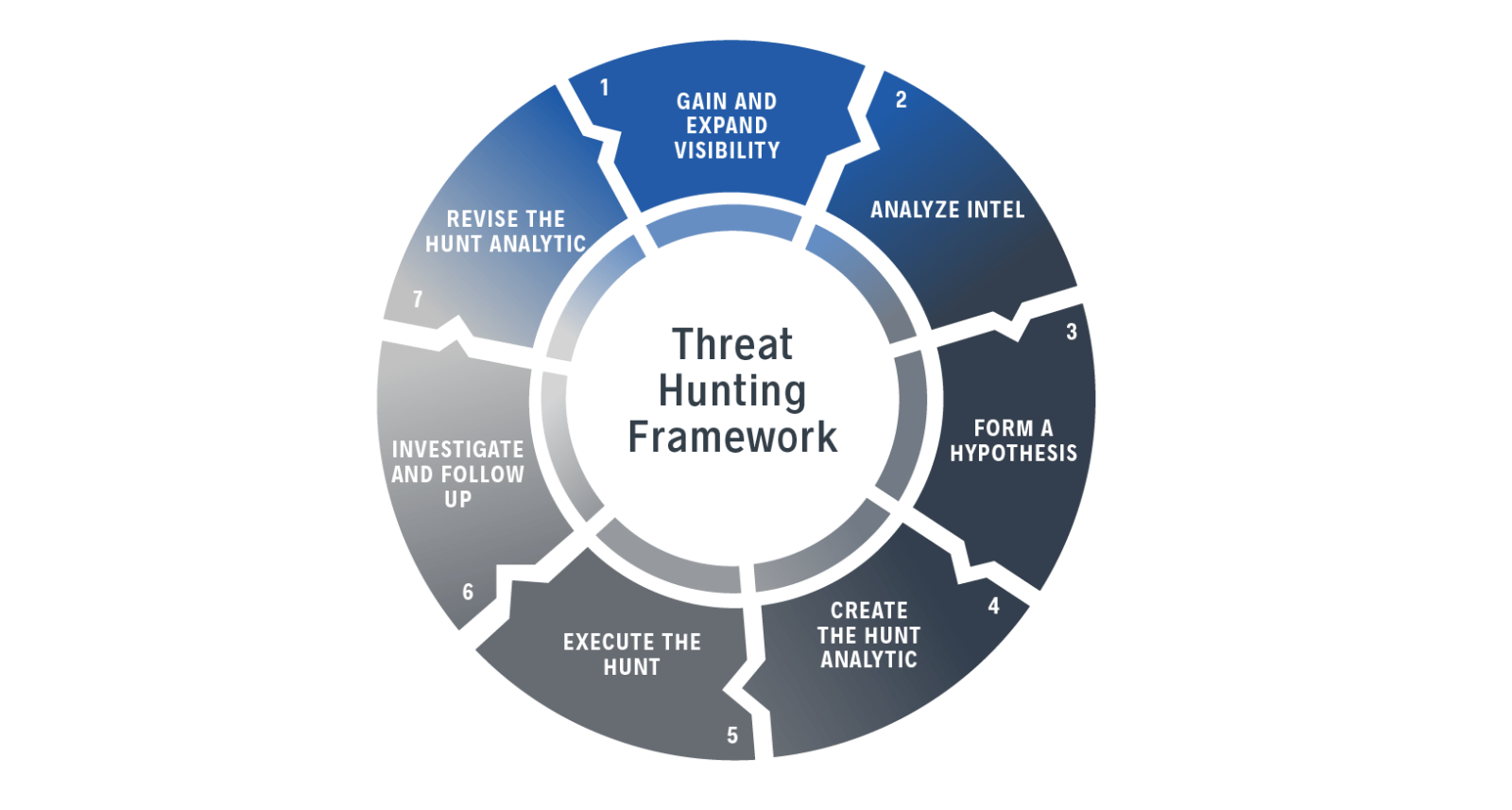
The threat landscape is constantly evolving, and so are the tools that security teams use to hunt for threats. Emerging trends in threat hunting tools include the use of artificial intelligence (AI) and machine learning (ML), the integration of threat intelligence feeds, and the development of tools that are specifically designed for cloud and container environments.
AI and ML are being used to automate many of the tasks that are traditionally performed by threat hunters, such as analyzing data, detecting anomalies, and identifying threats. This allows threat hunters to focus on more complex tasks, such as investigating and responding to incidents.
Threat intelligence feeds provide threat hunters with access to the latest information about known threats. This information can be used to improve the accuracy of threat hunting tools and to identify new threats that are not yet known to the security team.
Tools that are specifically designed for cloud and container environments are becoming increasingly important as more organizations adopt these technologies. These tools are designed to detect and respond to threats that are specific to these environments, such as container escapes and cloud-based malware.
Examples of Tools Pushing Boundaries of Threat Hunting
- IBM Security QRadar XDR:A comprehensive threat hunting platform that uses AI and ML to detect and respond to threats across the entire IT infrastructure.
- Mandiant Threat Intelligence:Provides access to a global network of threat intelligence analysts and a database of known threats.
- Palo Alto Networks Cortex XDR:A cloud-native threat hunting platform that provides visibility and control across all endpoints, networks, and clouds.
Clarifying Questions
What are the benefits of using threat hunting tools?
Threat hunting tools provide numerous benefits, including proactive threat detection, improved threat visibility, faster incident response, and enhanced threat analysis capabilities.
What are some popular threat hunting tools?
Some popular threat hunting tools include Splunk, ELK Stack, AlienVault OSSIM, and FireEye Helix.
How can I integrate threat hunting tools with my existing security infrastructure?
Integrating threat hunting tools with your security infrastructure involves establishing data connectors, configuring log collection, and implementing automation workflows to streamline threat detection and response.
